The challenges created by hybrid working
And the role of the workplace in its evolution
Hybrid working has become the dominant model in many organisations. However, its implementation has evolved more quickly than its design. In most cases, it has not been defined as a structured way of working, but rather as a response to the demand for greater flexibility.
The result is a model that exists but is not yet fully structured.
A model driven by demand, not by design
Organisations have embraced flexibility to attract and retain talent, respond to employee expectations and optimise the use of office space.
However, without redefining the role of the office or establishing how in-person and remote work should be combined, generic rules have been applied to very different working realities.
In some cases, office space has also been reduced without redefining how the remaining space should be used, resulting in irregular and unpredictable occupancy patterns.
The result is an inconsistent system that becomes apparent at three different levels:
This is where office design becomes a relevant variable within the wider working model.
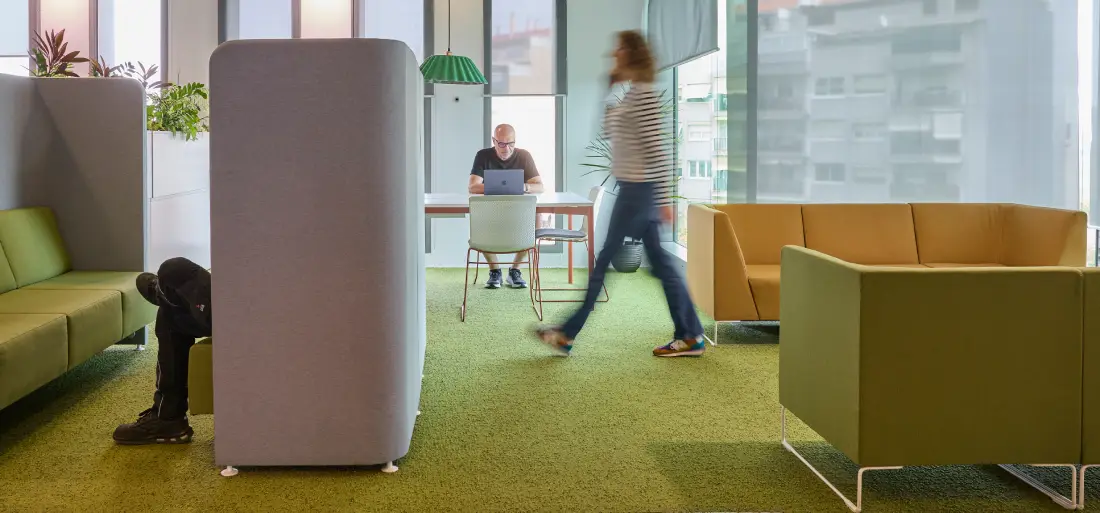
The challenges created by hybrid working
The office continues to play a central role, but its purpose has become unclear. In many cases, it has become somewhere people attend out of obligation rather than because of the value it provides.
However, the office still offers benefits that are difficult to replicate remotely.
The value of the office does not lie simply in bringing people together. It lies in reducing the invisible effort required to coordinate work and facilitating the activities that are more effective when carried out in person.
That is why the organisations managing hybrid working most successfully do not focus solely on the number of “days in the office”. They consider what happens there and how in-person attendance should be organised.
How this translates into office design
Office design cannot replace the organisation of work, but it can determine whether the system operates efficiently. Understanding the office’s new role involves more than arranging workstations and meeting rooms. It requires an understanding of how people work and how they use different spaces depending on the activity.
In practice, this means organising the workplace around different types of activity and interaction:
There is no single way of working, and the workplace must accommodate all of these activities to improve productivity.
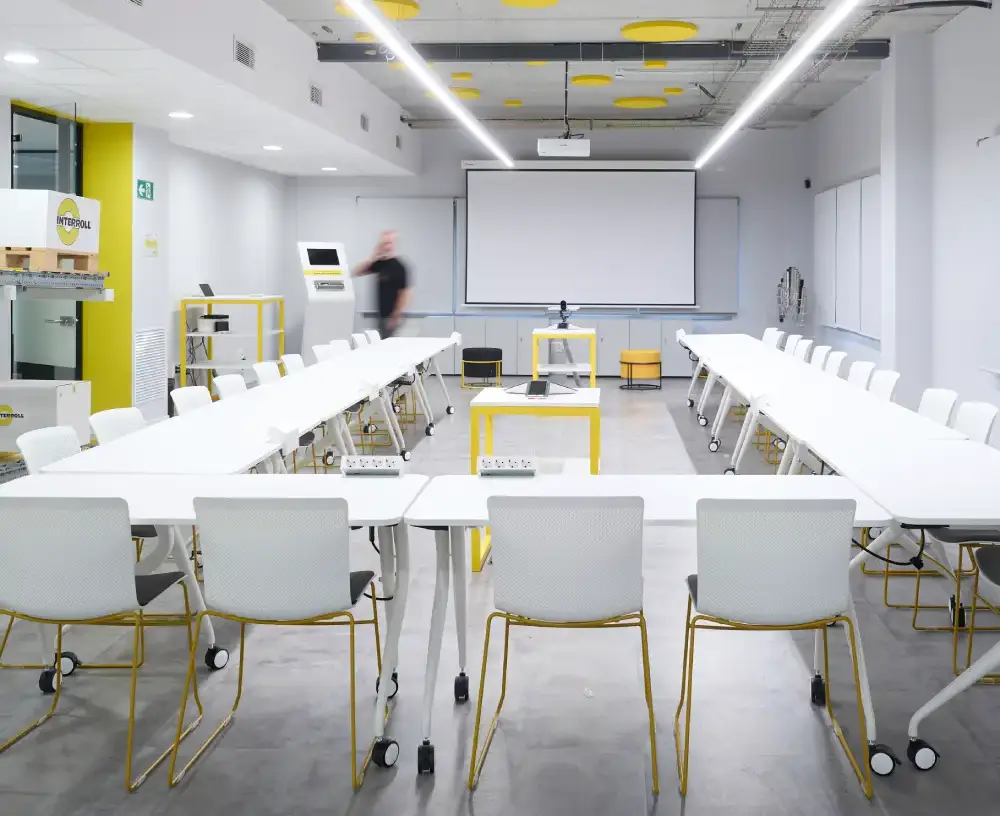
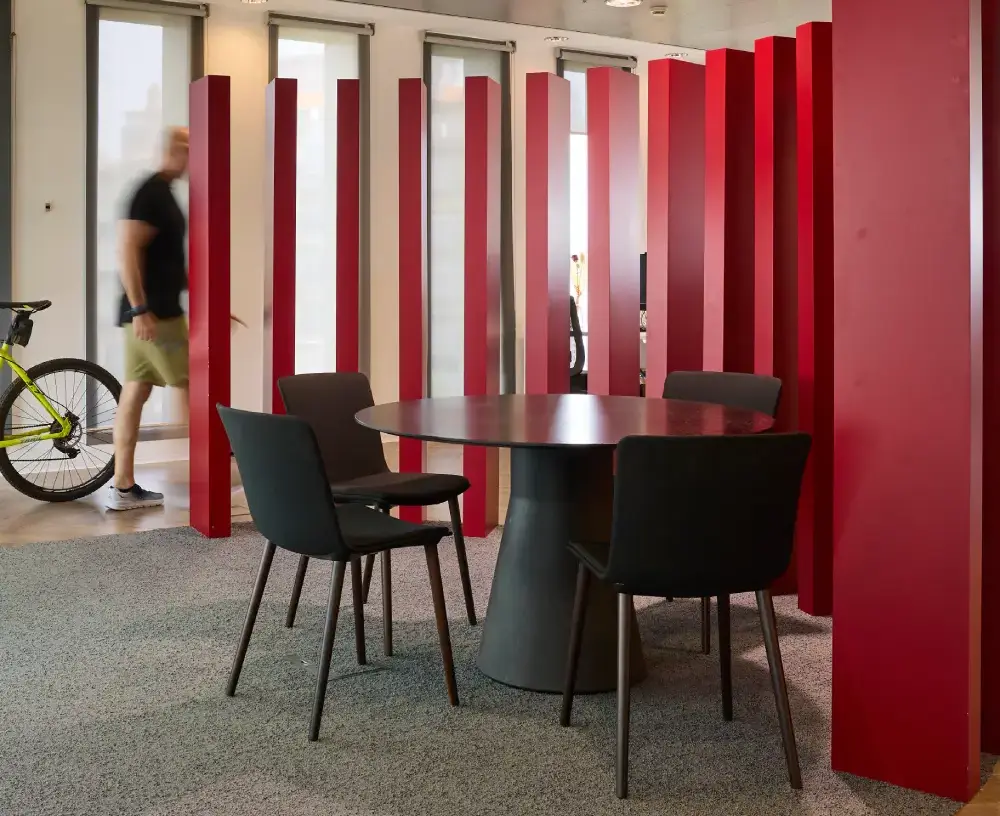
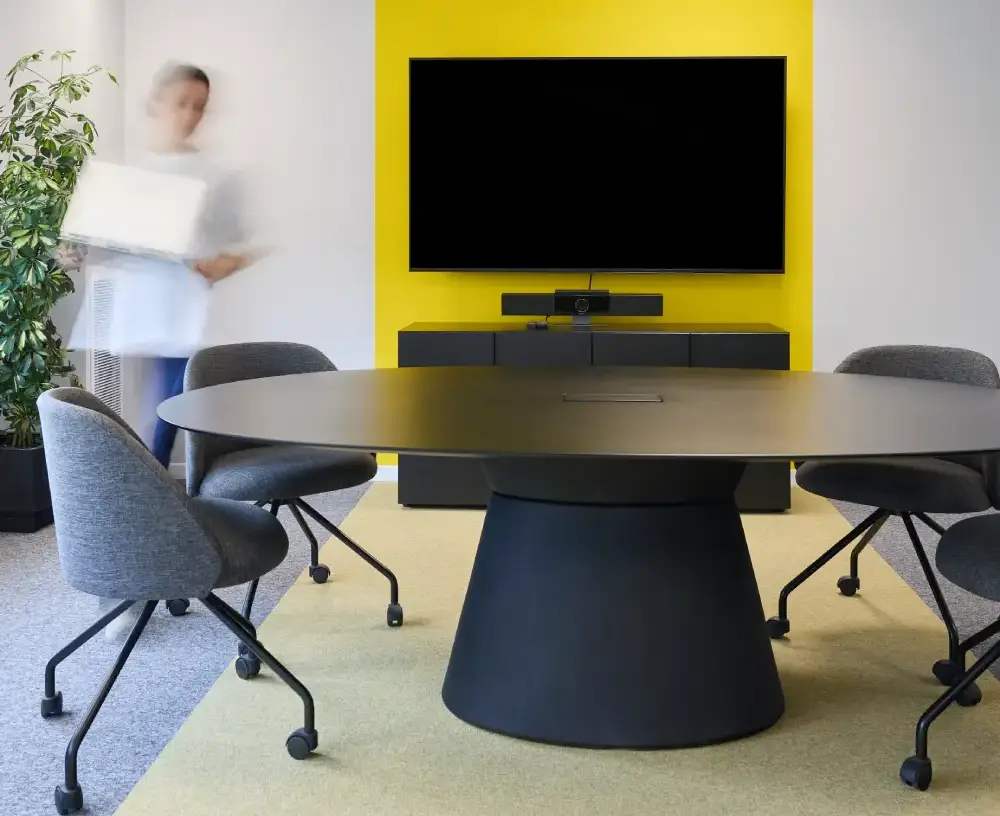
In this model, the office does not compete with remote working; it forms part of the same system. People understand why coming into the office makes sense and what they gain from being there.
It also means defining how the office is used throughout the week: which teams are present at the same time, which working dynamics are concentrated on particular days and which activities justify in-person attendance.
– In many organisations, the office is overcrowded on certain days and underused on others. This is a planning issue with significant cost implications.
– Flexible spaces make it possible to adjust office capacity. The same area can function as a workspace or a meeting room, depending on what is needed.
Similarly, when the office facilitates quick conversations between people who need to coordinate their work, many issues can be resolved before they turn into meetings or long chains of messages.
– In this sense, design does not simply organise the physical space; it also influences how communication flows between people.
– When all these elements are defined coherently, the office stops being somewhere employees are required to attend and becomes a valuable resource. The flexibility of the model is maintained while the inefficiencies associated with remote working are reduced.
Coming into the office is no longer an obligation without context. Instead, it has a clear purpose within the working model, improving employee satisfaction by helping people understand the value of their presence.
When the workplace defines how hybrid working operates
Hybrid working is here to stay. Without the considered design of both the workplace and the way work is organised, it will continue to create complexity. However, when hybrid working is structured as a system and the workplace is aligned with the way people work, it becomes a competitive advantage.
At Wholecontract, we help translate the way each organisation works into an effective workplace model, connecting organisational needs, teams, working dynamics and the office itself. In this way, the workplace stops being a problem and becomes a valuable tool for getting work done.
Share on social media